
Visiting Saint Ann's
Everyone is welcome to attend the Divine Liturgy at Saint Ann's. No previous experience with Byzantine Catholic worship is necessary.
If you are planning your first visit, we have answered some common questions below and provided a few practical details about attending services at our parish.
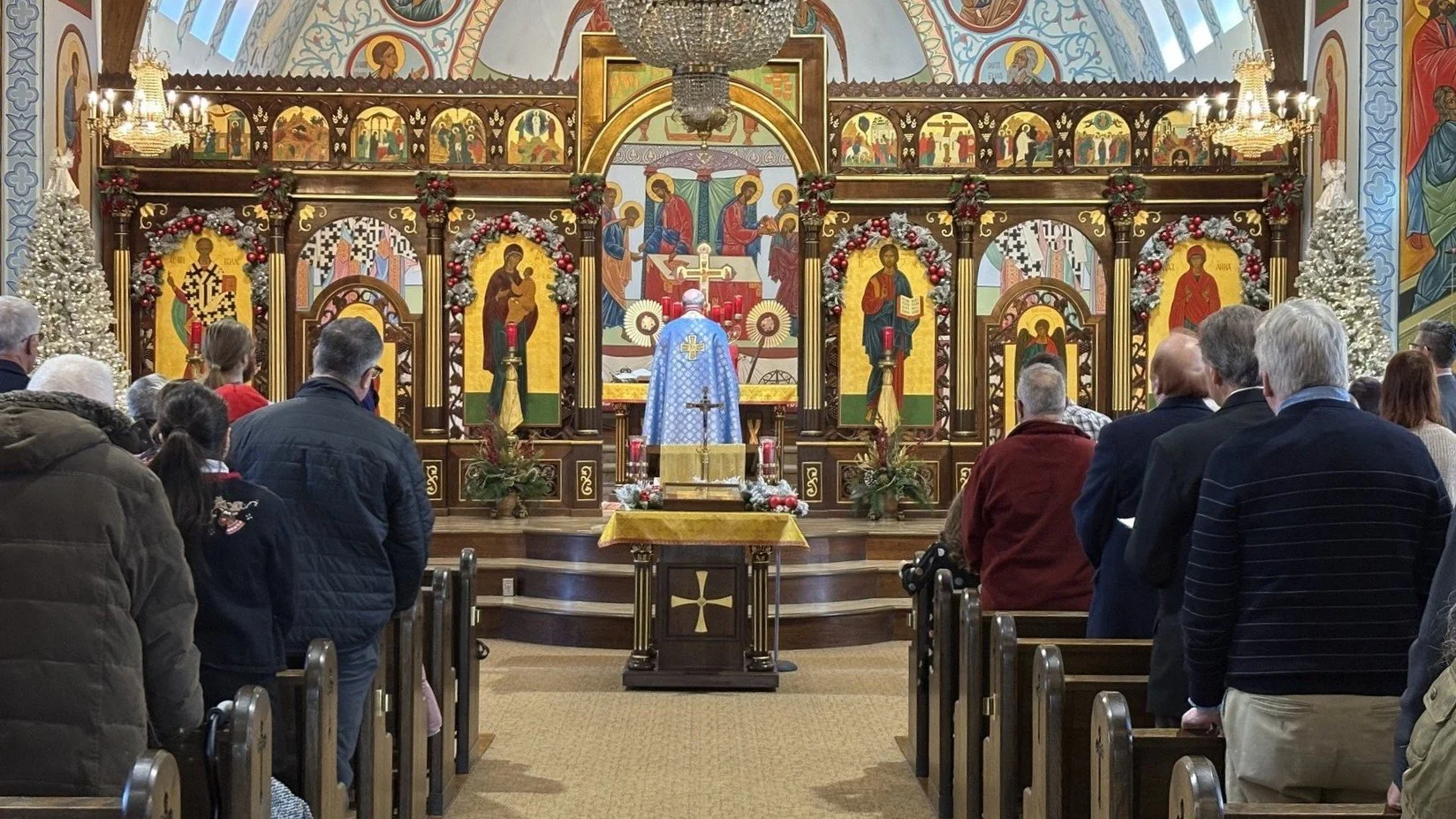
At Saint Ann's, we celebrate the Divine Liturgy of Saint John Chrysostom on most Sundays. Named for the fourth-century Archbishop of Constantinople, it is the principal form of Eucharistic worship in the Byzantine Catholic Church. Through the Divine Liturgy, we hear the Word of God, offer our prayers, and receive the Body and Blood of Christ in Holy Communion.
The Divine Liturgy has three principal parts: the Prothesis, during which the bread and wine are prepared; the Liturgy of the Catechumens, which includes the Scripture readings and Gospel; and the Liturgy of the Faithful, during which the Eucharist is celebrated. The Prothesis ordinarily takes place before the public service begins.
Nearly the entire Divine Liturgy is sung or chanted. The priest and deacon lead frequent litanies of prayer, to which the congregation responds, “Lord, have mercy.” You will also hear psalms, hymns, and readings from the Epistles and Gospels.
Below are answers to some common questions about attending the Divine Liturgy.
-
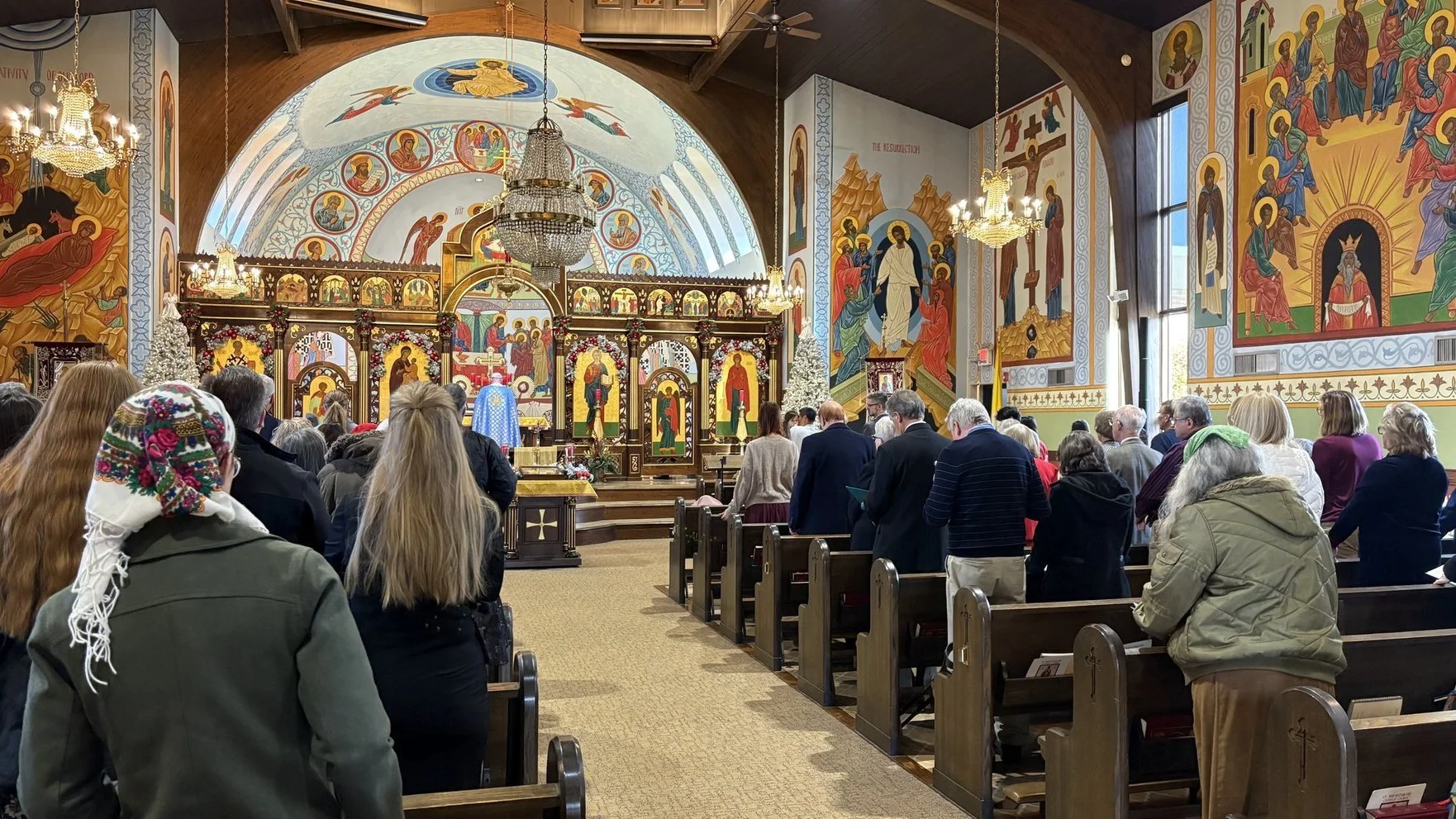
If it is your first time at St. Ann’s, we suggest simply listening and praying along with the Liturgy as you are able. If you need a book to help you, the yellow books found in every pew contain the text of the Divine Liturgy. As you become more familiar with the structure of the Liturgy, the teal books in every pew contain the music. The page numbers we will use that day are listed on a board situated at the front-left of the church.
-
Standing is the normal posture for prayer. In the Byzantine Catholic tradition, standing is a symbol of the resurrection. We stand for the majority of our services, including the Eucharistic prayer. St. Ann’s does have pews if you feel the need to sit or cannot stand the entire time.
-
Children are full members of our community, and children of all ages are welcome at all liturgical services. Children are a gift to the parish and a reminder that St. Ann’s will be here for generations to come.
We understand that sometimes children can get overwhelmed. If your child needs a break, the St. Ann chapel in the back of the church is available. But please bring them back into the Liturgy as soon as they are able!
We also have faith based children’s books available in the St. Ann chapel for them to look at if you think that would be helpful for your kids during their time with us.
-
The Divine Liturgy at Saint Ann's is celebrated almost entirely in English. Occasionally, some hymns are sung in Church Slavonic, the traditional liturgical language of the Ruthenian Catholic Church.
On the first Sunday of each month, the 8:00 a.m. Divine Liturgy includes more hymns and prayers sung in Church Slavonic.
-
Any Catholic may attend Divine Liturgy at a St. Ann Byzantine Catholic Church, receive Holy Communion if they are properly disposed, and fulfill their Sunday Obligation or Feast Day Obligation.
If you are not Catholic, you are welcome to participate in the prayers, but you should not receive Communion. Please speak with our priest if you would like to learn about becoming Catholic.
-
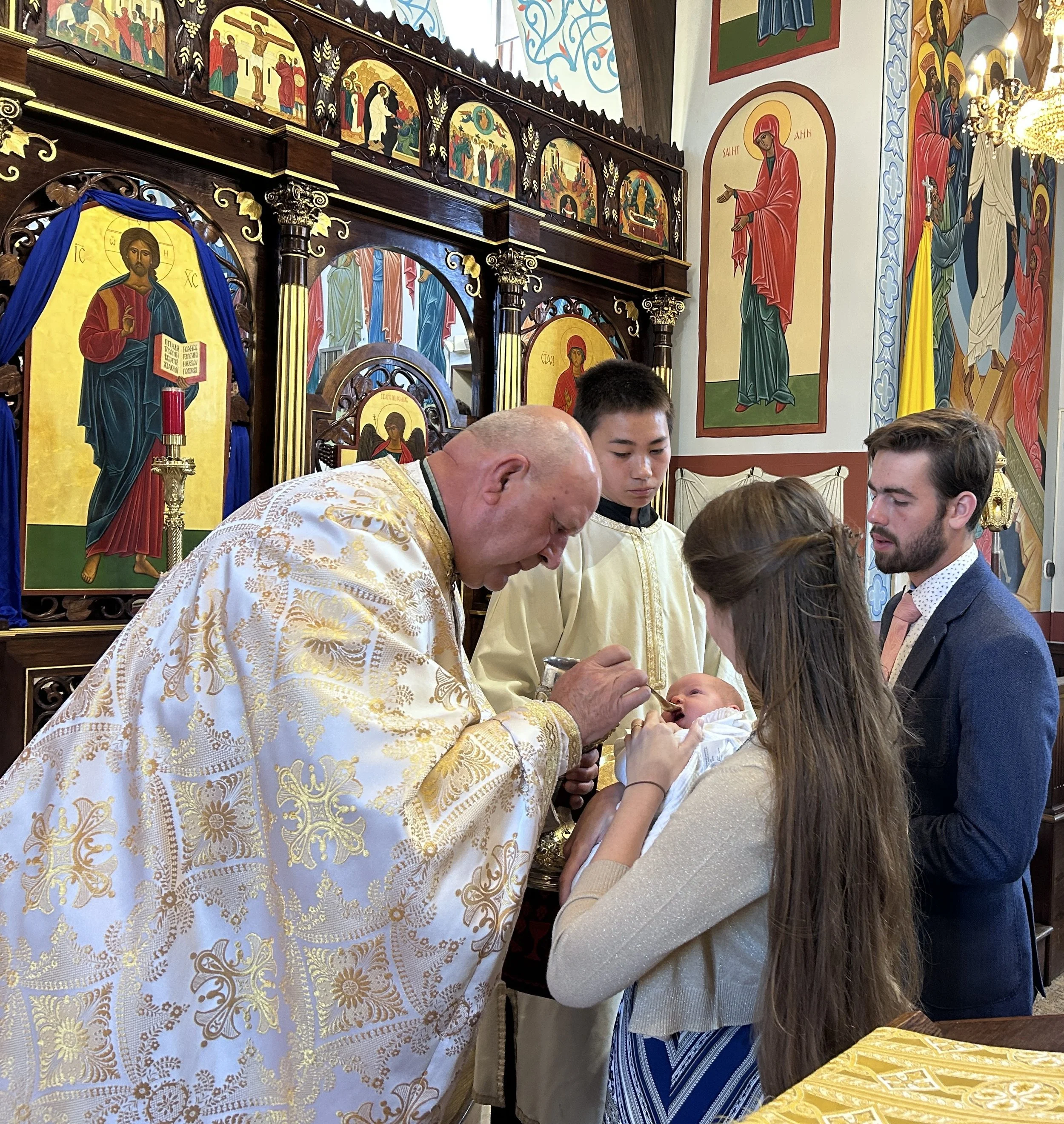
The Body and Blood of Christ are given together on a spoon. Open your mouth, tilt your head slightly back, and keep your tongue inside your mouth. The priest will place the Eucharist in your mouth.
The Iconostasis
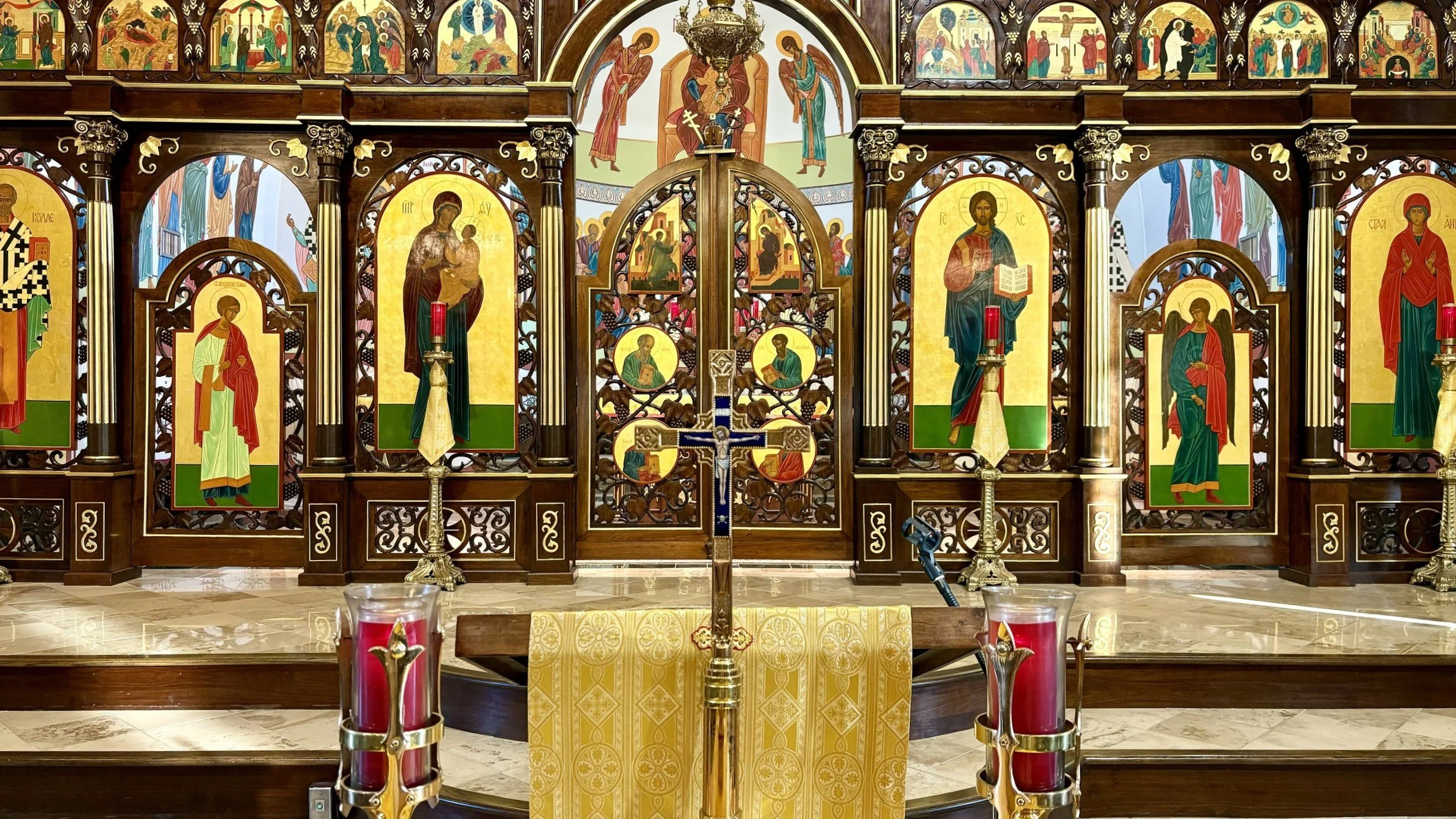
The iconostasis is the wall of icons that separates the main body of the church from the sanctuary, where the altar stands. More than a divider, it represents the meeting of heaven and earth in worship. Its icons of Christ, the Theotokos (Mother of God), and the saints remind us that we worship alongside the whole Church, both in heaven and on earth.
At its center are the Holy Doors, which open at important moments during the Divine Liturgy. You will see the clergy pass through its doors as they lead the prayers, proclaim the Gospel, and bring Holy Communion to the faithful.
Anointing & Blessed Bread
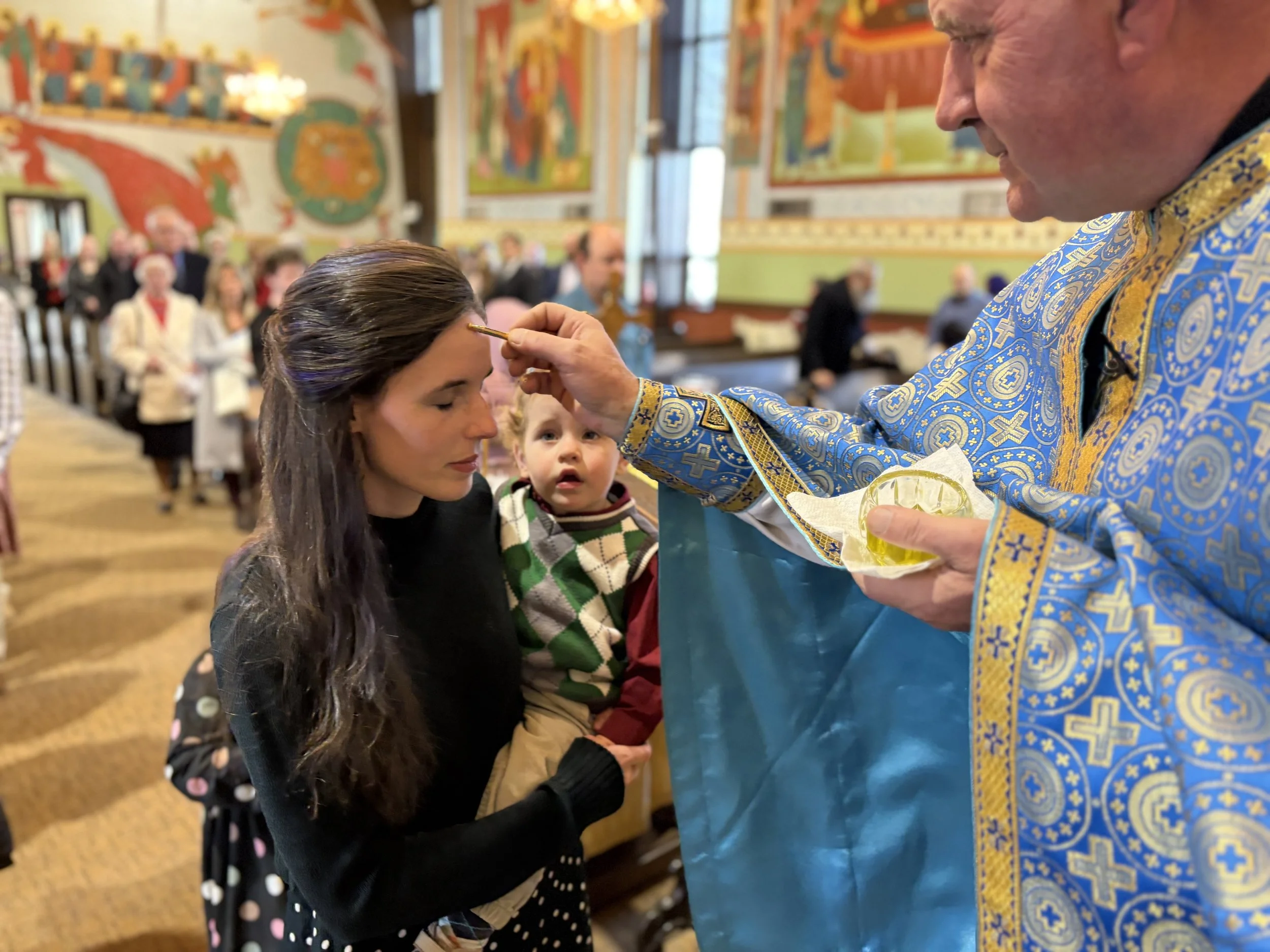
On certain Sundays and feast days, after the Divine Liturgy has concluded, you may see people come forward for a tradition called Mirovanije. This takes place after Holy Communion and the closing prayers.
The priest anoints each person with holy oil, after which they may take a piece of blessed bread. This bread is not Holy Communion, and visitors are welcome to participate. Simply join the line, receive the anointing, and take a piece of bread.
The Sign of the Cross
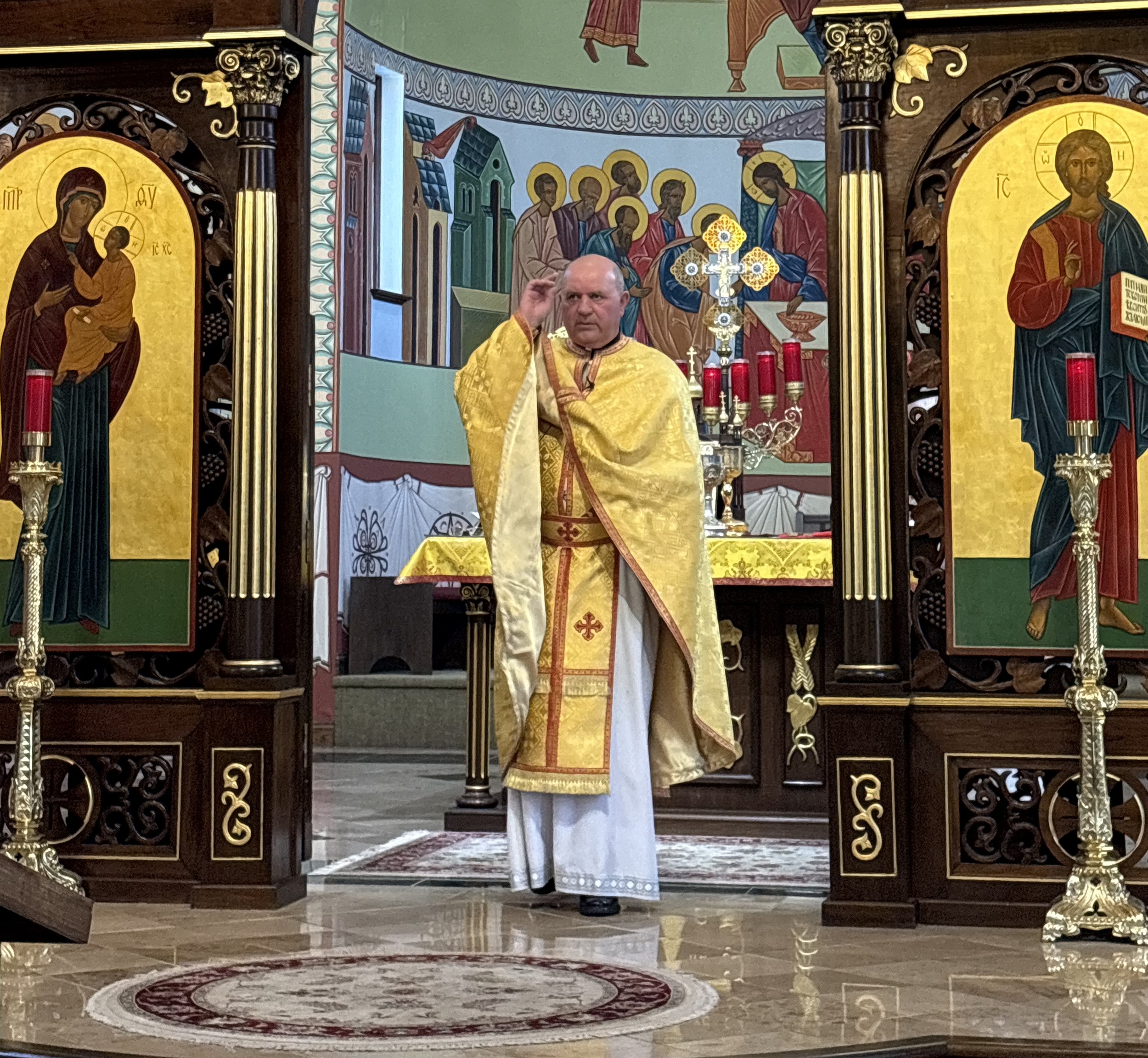
Byzantine Catholics make the Sign of the Cross by touching the forehead, chest, right shoulder, and left shoulder.
The thumb and first two fingers are joined together, representing the three Persons of the Holy Trinity. The remaining two fingers are folded against the palm, professing the two natures of Jesus Christ, divine and human.
Throughout the Divine Liturgy, you will see the faithful make the Sign of the Cross whenever the Father, Son, and Holy Spirit are invoked, and when the priest gives a blessing. The Sign of the Cross is often accompanied by a bow.
Infants & Holy Communion
In the Byzantine Catholic Church, infants receive all three Mysteries of Initiation: Baptism, Chrismation, and the Eucharist. Through Baptism they are united to Christ, in Chrismation they receive the gift of the Holy Spirit, and in the Eucharist they partake of Christ's Body and Blood.
From infancy onward, children receive Holy Communion as part of their regular participation in the Divine Liturgy. This practice dates back to the early Church and has remained part of Eastern Christian worship for nearly two millennia.
Explore the Byzantine Faith
About Saint Ann
Get to know our parish, our Ruthenian roots, and what it means to be Byzantine Catholic.
Meet Our Parish Introductory bookletCome and See
An introduction to Byzantine Catholic faith and worship from the Eparchy of Passaic.
Read the Booklet · PDF PodcastBecoming Byzantine
Continue learning about Byzantine Catholic faith and life through the Becoming Byzantine podcast.
Explore the PodcastYou are welcome here
We Would Be Glad to Meet You
Introduce yourself after the Liturgy, or contact our priest before your visit if you have questions or are interested in becoming Catholic. If you would like a sense of our worship beforehand, you can also watch a Divine Liturgy online.
Plan Your Visit
Check our weekly schedule for Divine Liturgy and other services.
Saint Ann Byzantine Catholic Church 5408 Locust LaneHarrisburg, PA 17109